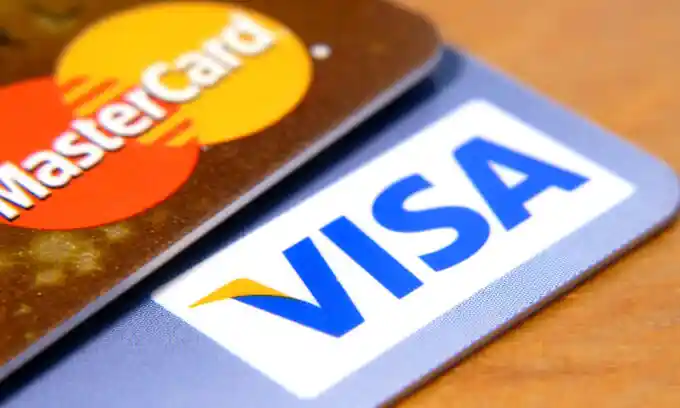
When shopping online or making everyday purchases, nearly everyone has seen the VISA or Mastercard logo printed on their cards. A widespread misconception is that VISA and Mastercard function like banks—issuing credit lines, managing debt, and lending money directly to consumers.
In reality, neither VISA nor Mastercard issues cards or extends credit. Understanding how these payment networks operate is the key to evaluating credit cards effectively.
Breakdown of the Two Payment Networks
Cardholder ──► Merchant POS ──► VISA / Mastercard Payment Network ──► Issuing Bank (Approves/Declines)
🔵 VISA
- Network Infrastructure: Operates one of the world’s largest electronic payment processing networks, known as VisaNet.
- Core Function: Connects merchants, financial institutions, and cardholders to process electronic transactions seamlessly across the globe.
- Transaction Authority: VISA transmits data instantly, but the decision to approve or decline a transaction rests primarily with the issuing bank (e.g., Chase, Citi, HSBC).
🔴 Mastercard
- Network Infrastructure: Operates a global payment processing network connecting consumers, merchants, and financial institutions.
- Core Function: Facilitates secure payment processing for credit cards, debit cards, and digital payment devices worldwide.
- Operational Scope: Mastercard does not issue cards directly to individuals, nor does it set credit limits or collect interest charges.
The Big Misconception: Payment Networks vs. Issuing Banks
The key distinction lies in the separation between the payment processing network and the card-issuing institution:
- Payment Networks (VISA / Mastercard): They build and maintain the global digital highway that allows transaction data to travel securely between a merchant’s bank and a cardholder’s bank in milliseconds.
- Issuing Banks (The Issuers): Financial institutions handle credit card applications, set credit limits, determine interest rates, manage rewards/cashback programs, charge annual fees, and extend lines of credit.
Is VISA Automatically Better Than Mastercard?
Not necessarily.
A card’s overall value, fees, and benefits are rarely determined by whether it carries a VISA or Mastercard logo. Both networks boast near-universal acceptance across millions of merchants worldwide.
Instead, a credit card’s true value depends on:
- Issuer Rewards & Perks: Sign-up bonuses, cashback rates, travel points, and annual fee waivers set by the bank.
- Card Tier Level: VISA tiers (e.g., Traditional, Signature, Infinite) and Mastercard tiers (e.g., Standard, World, World Elite) offer varying perks like airport lounge access or travel insurance.
- Foreign Transaction Fees (FTF): Determined by the issuing bank, which dictates whether you pay an extra fee for international purchases.
- Exchange Rate Margins: Slight daily variations in base currency conversion rates applied by each network during foreign currency transactions.
How to Compare Credit Cards Effectively
When comparing two cards, do not focus solely on the VISA or Mastercard logo on the front.
Instead, evaluate:
- Who is the issuing bank? (This determines customer service, app experience, and approval odds).
- What are the specific terms and benefits? (Look at APR, annual fees, foreign transaction fees, and cashback rates).
Quick Survey
Which network do you use more often for daily purchases: VISA or Mastercard? Let us know in the comments!