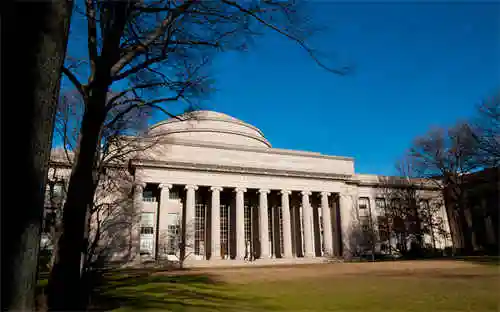
While MIT charges upwards of $65,000 per year and accepts less than 4% of applicants, it does something extraordinary that most people overlook: it publishes virtually its entire curriculum online for free, forever.
This is not a teaser, a sample, or a limited trial. Over 2,500 undergraduate and graduate courses across 30+ departments—including computer science, physics, mathematics, engineering, and business—are available to anyone. You get the same lecture videos, detailed problem sets with solutions, exams with answer keys, syllabi, and reading lists that real MIT students receive.
Why Don’t More People Know About It?
Launched in 2002, MIT OpenCourseWare (OCW) pioneered a radical open-education movement. Yet, 24 years later, the vast majority of people have never heard of it.
The reason is simple: MIT doesn’t run commercial ads, viral campaigns, or influencer partnerships. It quietly sits at ocw.mit.edu. Despite this lack of marketing, over 500 million people worldwide have used these resources to transform their careers, including self-taught developers who landed software engineering roles at Fortune 500 companies without ever stepping foot on a physical campus.
The 9 Free MIT Resources You Need to Explore
Explore MIT Learn Hub ──► Dive into OpenCourseWare (2,500+ Courses) ──► Watch Full Lectures on YouTube ──► Practice with MITx & Open Learning Library
1. MIT OpenCourseWare (OCW)
- URL:
[http://ocw.mit.edu](http://ocw.mit.edu) - What it is: The flagship repository containing complete syllabi, 500+ page lecture notes, problem sets with solutions, and exams across 2,500+ courses. No registration, deadlines, or fees required.
- Top 5 Starter Courses:
- Introduction to Computer Science and Programming Using Python (6.0001)
- Mathematics for Computer Science (6.042J)
- Introduction to Algorithms (6.006)
- Blockchain and Money (15.S12) (Taught by former SEC Chair Gary Gensler)
- How to Speak (RES.TLL-005) (Legendary presentation skills masterclass)
2. MIT’s YouTube Channel
- URL:
[http://youtube.com/@mitocw](http://youtube.com/@mitocw)(6M+ subscribers) - What it is: The largest
.educhannel on YouTube. Features 300+ full semester-length courses (25–40 lectures per course, 50–90 minutes each). Watch legendary series like Walter Lewin’s Classical Mechanics or Gilbert Strang’s Linear Algebra directly on your commute or at home.
3. MIT Learn (AI-Powered Hub)
- URL:
[http://learn.mit.edu](http://learn.mit.edu) - What it is: A centralized, AI-driven learning hub launched to unify MIT’s scattered educational platforms (OpenCourseWare, MITx, etc.). Simply describe what you want to learn, and the AI guides you to the ideal starting point.
4. MITx Online
- URL:
[http://mitxonline.mit.edu](http://mitxonline.mit.edu) - What it is: Structured online courses that can be audited for free (full access to all lectures and exercises at $0). Optional verified certificates and rigorous MicroMasters programs (e.g., Data Science, Supply Chain Management) are available for a modest credential fee.
5. MIT Open Learning Library
- URL:
[http://openlearninglibrary.mit.edu](http://openlearninglibrary.mit.edu) - What it is: A middle-ground platform combining OCW flexibility with MITx interactive elements (embedded quizzes, instant feedback) without enrollment deadlines or cohort pressures.
6. MIT OpenCourseWare for High School
- What it is: Curated college-level resources (AP Calculus, Physics, Biology, Chemistry) designed for advanced high school students, homeschoolers, and gifted learners seeking rigorous academic challenges.
7. Chalk Radio Podcast
- What it is: An inspiring podcast available on Spotify and Apple Podcasts where MIT professors explain the pedagogy behind their teaching methods, course designs, and problem-solving philosophies.
8. Creative Commons Licensing
- What it is: MIT publishes content under a Creative Commons license, allowing educators, students, and creators to legally download, modify, remix, and redistribute course materials for non-commercial educational purposes.
9. Hidden Gem Courses
Beyond standard coding and math, explore unique interdisciplinary gems:
- The Film Experience (21L.011) — Film analysis from a top engineering school.
- ChemLab Boot Camp (RES.HS-003) — Hands-on chemistry lab methods.
- The History of MIT (STS.050) — An academic look at how MIT evolved.
Conclusion: Knowledge Without Credentials
You won’t get a degree, a campus alumni network, or a formal diploma. But you will get world-class knowledge from the exact same source at $0 cost.
As one self-taught engineer noted: “The difference between me and an MIT graduate is that they have the diploma, and I have the knowledge. In a technical interview, nobody asks for your diploma—they ask you to solve the problem.”
Open [http://ocw.mit.edu], pick a course, and press play. The door has been open since 2002.